The news of D'Angelo's death has struck the music world deeply.
He was a voice synonymous with neo-soul and a defining figure of his era.
This loss reads not only as a personal tragedy but as a turning point in the genre's history.
At 51, his final and unfinished recordings now occupy listeners' memories and questions.
D'Angelo's Exit: What Ended and What Remains?
Case Overview
We start by setting the scene.
Born Michael Eugene Archer in 1974, he performed from the mid-1990s as D'Angelo.
He broke through in 1995 with Brown Sugar, an album that introduced neo-soul to a wider audience (neo-soul mixes classic soul with modern R&B and hip-hop sensibilities).
Meanwhile, his 2000 album Voodoo won multiple Grammy awards and cemented his reputation.
His passing prompts a broader examination beyond the life of one artist.
Fans had been awaiting portions of what might become a posthumous fourth studio album, and that anticipation now turns into unresolved feeling.
This article calmly explores his life, musical legacy, public reaction, and the health implications his death raises.
A Musician's Trace Across Time
Music and Innovation
We look at the depth of his innovations.
D'Angelo injected fresh energy into R&B and soul traditions, renewing old forms with new textures.
The easy groove of Brown Sugar and the experimental rhythms of Voodoo influenced many contemporaries and successors.
His singing conveyed subtle emotional detail and helped shape neo-soul's identity.
His records were not just albums; they became a chronicle of time and a map of feeling.
His collaborations with peers such as Erykah Badu and Lauryn Hill (both prominent artists who helped define 1990s soul and R&B) enriched the creative context of that era.
Through collaboration he pushed the genre's boundaries and inspired later generations of musicians.
D'Angelo's sound fundamentally reshaped what R&B could express.
Illness and Death: The Line Between Public and Private
Records of Illness
We begin briefly and with gravity.
D'Angelo spent months receiving hospital treatment as he fought pancreatic cancer.
The illness was shared by family and a small circle of close friends, and his public appearances dropped sharply.
Choosing silence between public life and private care sometimes served to protect, and at other times caused distance from fans and media.
Meanwhile, the era of social media meant fandoms often filled gaps in information with speculation.
In that process, facts and rumors mixed and private suffering could spill into the public sphere.
That dynamic raises questions about how society understands medical diagnoses and treatment.
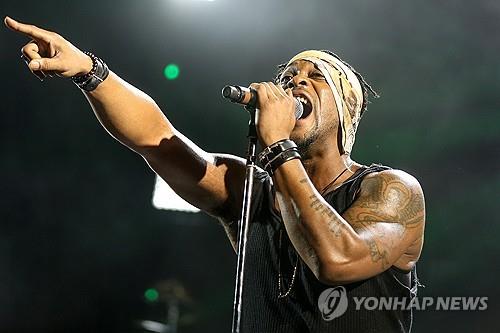
Public Response and Waves of Mourning
Fans' Grief
Tributes followed quickly.
Across streaming platforms, stations, and venues his songs climbed playlists and charts.
Fans shared concert memories and lyrical lines, assembling a collective memory of his work.
These modern forms of mourning extend private loss into public ritual.
The messages from fans were sometimes comfort, sometimes questions—what does the music he left mean to us now?
At the same time, fellow musicians honored him with performances and tributes, reaffirming his artistic status.
Record labels and collaborators are reportedly discussing whether and how to release remaining material, though those choices require extreme care.
Above all, decisions must respect the wishes of his family and closest partners in the work.
Cultural Meaning: Where Generations and Genres Meet
Genre Legacy
We trace the implications.
D'Angelo became a figure closely associated with neo-soul, and his death is read by many as the close of a defining chapter.
Neo-soul grew where the soul tradition and contemporary urban sensibilities intersect; he made that meeting visible.
His music combined heartfelt honesty with rhythmic experimentation and helped broaden the genre.
Albums like Voodoo and Black Messiah became reference points for later artists.
Those records created standards that recognize internal diversity while giving new musicians a base for experimentation.
His legacy is not mere nostalgia; it sparks new creative work.
Two Sides of Artistic Appraisal
Pro: His Music Is Immortal
Here is the short case for his lasting importance.
Supporters call D'Angelo a monumental figure for neo-soul.
His albums are praised not just for sales but for artistic completeness.
In particular, the originality of his sound design and vocal expression continues to inspire peers and younger artists.
Examples range from his work with Erykah Badu to shared moments with Lauryn Hill and the many instances where later musicians sampled or covered his songs.
From a musicological view, his songs created new textures where rhythm and harmony intersected.
Those creative contributions extend beyond fleeting trends into a long-term legacy. Therefore many critics and musicians treat his works as essential study material for modern R&B and neo-soul.
Socially, his music bridged Black musical traditions and contemporary urban feeling.
That bridging helped define a genre identity and spread its cultural influence.
Ultimately, he became more than a popular singer—he became a voice of a generation.
Con: Was He Overstated?
Now the concise counterpoint.
Some argue that D'Angelo's influence has been overstated.
They say the category of neo-soul was shaped and labeled by critics and media, which can elevate a few figures above a wide field.
While his work was clearly innovative, crediting one person for a genre's emergence risks simplifying a complex history.
For instance, neo-soul developed through many artists, local scenes, and small labels.
Historic currents in Black music combined with regional cultures to form the genre, and collapsing that into a few stars can misread the wider story.
Another criticism holds that parts of his output sometimes romanticized older soul aesthetics rather than fully breaking new ground.
Such points suggest the innovation narrative may have been overstated at times.
In the end, judgment depends on context; individual genius is real, but interpreting a genre's development requires attention to many contributors and conditions.
Health and Social Takeaways
Health and Early Detection
We keep this part focused.
D'Angelo's death highlights how deadly pancreatic cancer can be and how hard it is to detect early.
Pancreatic cancer often shows symptoms late, which delays treatment and worsens outcomes (for readers: early detection means finding disease sooner, when it's easier to treat).
This reality stresses the public-health importance of screening, prevention, and research.
Public figures' illnesses often become moments that raise awareness about medical issues.
This case may prompt renewed discussion about resources for cancer care, support for families and caregivers, and the systems that help people through long illnesses.
Such discussion should move beyond private grief to policy and community support.
Remaining Record and the Road Ahead
Managing the Legacy
The legacy continues.
Whether unfinished tracks will be released, and in what form, depends on careful choices by family and producers.
The primary value in managing a musical estate is fidelity to the artist's intent and authenticity.
Commercial pressures can clash with cultural responsibilities, and that tension requires delicate handling.
Agreement between the record company and the family may take time.
In that period, expectations from fans and commitments to artistic integrity must be balanced.
Options include reissues, remixes, and vault releases, each offering a different way to reinterpret his image and work.

Above all, however, the core question is how his music will live in people's lives.
Records are physical objects and repositories of memory; deciding how to preserve and pass them on is a communal task.
D'Angelo's music will remain an object of study and reinterpretation, and that process shows how music history is continually revised.
Conclusion: Memory, Responsibility, and Questions
We summarize the essentials.
D'Angelo's death revived both artistic records and public debate about health and care.
His work occupies an important place in neo-soul's story and also draws attention to pancreatic cancer and related health issues.
The music and memories he left behind are a starting point for new creation and social conversation.
In conclusion, we should not treat his catalog as a museum piece but as an active resource for artists and educators.
While respecting his family's choices, it is also necessary to discuss the public value and educational use of his work.
Finally, we ask the reader: what does his music mean to you?
