The theme is “Dyed in Light and Steel,” aiming to blend industry and culture.
The program includes free screenings of 81 films from 12 countries, a large slate for a regional festival.
It is a meaningful experiment testing both local identity and cultural tourism strategies.
Asking Again with “Light and Steel”: The Challenge of Namdo Film Festival Season 2
Identity is the core
The Namdo Film Festival packages local identity into film.
After launching Season 1 in Suncheon (2023), the festival returns in 2025 for Season 2 in Gwangyang.
However, this move is more than a change of venue; it expands the region’s storyline from natural landscapes to industrial scenes.
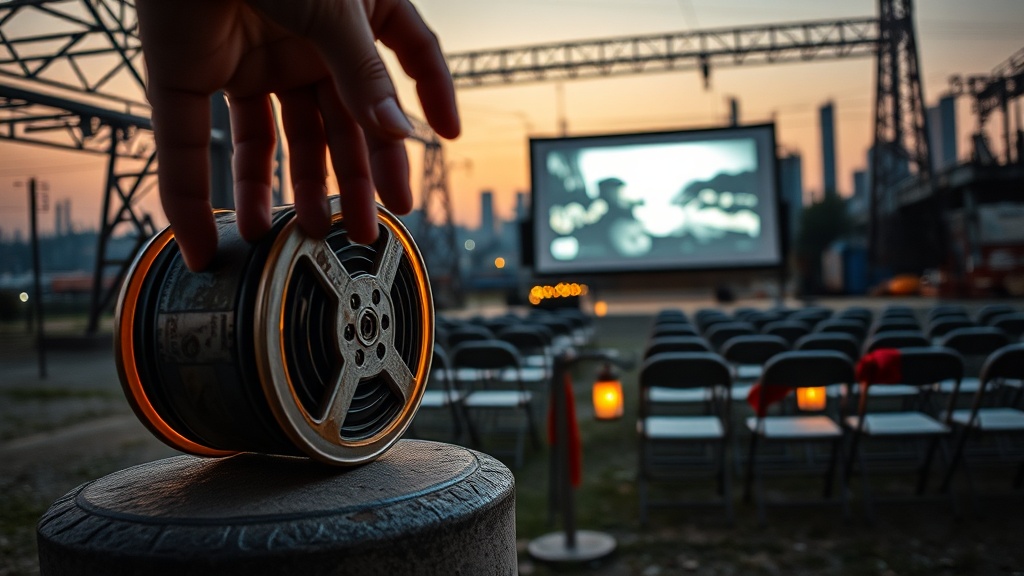
The Season 2 theme, “Light and Steel,” alludes to Gwangyang’s port, steelworks, and nighttime views.
The festival will screen 81 films from 12 countries for free at five locations, including Gwangyang Citizen Plaza and the Jeonnam Provincial Museum of Art (a regional public museum).
Programming ranges from a red-carpet opening to actor and director showcases, documentary screenings, and critic talks.
Meanwhile, organizers keep the free-screening policy to maintain audience access (no ticket cost).

Clear objectives
The festival’s goal is to reinterpret Namdo (South Jeolla) cultural assets through film.
It wants to expand cultural access for residents while turning Gwangyang’s industrial and historical scenery into cultural content.
Free screenings lower the barrier between locals and visiting audiences. However, this raises hard questions about financial and operational sustainability.
Programming outline
The screening lineup spans 81 films from 12 countries, covering diverse genres and themes.
Highlights include the “Gwangyang Ten Million Cinema” special, an actor-and-director showcase, and a strand for local documentaries.
Venues include the civic plaza, the provincial art museum, and a local multiplex—five sites and eight screens in total.
On-site events and talks are designed to be meeting points between residents and film audiences.
Support and enthusiasm: Local revival and cultural reach
Positive views are strong
Supporters view the festival as a turning point for local cultural life.
They argue that connecting Gwangyang’s industrial character to a film festival strengthens regional identity.
Free screenings are praised as a practical tool to raise citizen participation by lowering access thresholds.
Supporters expect positive spillovers for the local economy and hope the festival will become a cultural-tourism asset.
Specifically, they predict increased business for shops, higher revenue for lodging and restaurants, and more visitors drawn by cultural events.
Audiences will encounter films from many countries, which can broaden cultural exposure and raise local residents’ cultural literacy.
In short, translating local history and industry into film narratives can enhance the region’s brand value.
Supporters also see financing as solvable over the long term with government grants, municipal budgets, and private sponsorships.
They add that the festival could open opportunities for young artists and local creators.
By creating direct contact between actors, directors, and the community, special programs can strengthen the local cultural ecosystem.
Overall, supporters believe the Namdo Film Festival can evolve into a sustainable cultural platform, not merely a short-term event.
Opposition and concerns: Finance, operations, and visibility
Concerns are pragmatic
Critics point to real constraints the festival faces.
Free screenings and an extensive program carry substantial costs.
Limited municipal budgets and uncertain external funding raise doubts about long-term viability.
They demand transparent finances and a clear, stable funding plan before the festival scales up further.
Critics also note that region-focused festivals struggle to attract national and international attention.
Compared with major city festivals, access to star talent and big distributors is restricted.
On the other hand, some attendees may find the program less headline-grabbing than they expect.
If the local audience base is thin, box-office momentum will be limited and financial pressure will grow.
From an operations perspective, securing professional staff and sustaining coherent programming year to year are essential.
Large screening schedules and many side events require planning expertise and on-the-ground experience.
Critics argue that cost-cutting and efficiency alone cannot substitute for institutional support and organizational depth.
In sum, opponents question sustainability because of funding uncertainty, recognition limits, and operational fragility.
Deep analysis: Reading both light and shadow
The reality is mixed
There is a clear advantage: the festival visualizes regional identity.
Season 1 in Suncheon emphasized nature; Season 2 in Gwangyang brings industry and expands the narrative spectrum of Namdo.
This thematic shift is a meaningful strategy to show the region’s layered cultural sides.
Nevertheless, cultural value creation always coexists with cost constraints.
On finance, free screenings create social value by making culture accessible.
However, if the free model continues indefinitely, the festival’s finances could falter.
The balance between municipal support and private sponsorship, and the possible introduction of paid tickets or premium paid programs, will be decisive.
Practical measures worth exploring include tax incentives, public funding programs, and incentives for local corporate investment.
Culturally, Gwangyang’s industrial image offers fresh storytelling resources.
Steel mills, the port, and nightscapes can be cinematic backdrops that strengthen place branding.
On the other hand, curating programs that satisfy both locals and visiting cinephiles is a hard editorial task.
The festival’s long-term success depends on finding a sweet spot between popular appeal and artistic merit, and between local themes and universal concerns.
Ultimately, success requires balancing cultural impact with financial stability.
This means a transparent funding plan, collaborative models with local industry, and a sustainable programming system.
Meanwhile, data-driven audience programming and targeted marketing can help raise recognition.
In short, the Namdo Film Festival has the potential to connect region and world, but realizing that potential needs institutional support, stable finance, and professional operations.
Conclusion: Balancing cultural experiment with practical preparation
The takeaway is balance
The Namdo Film Festival in Gwangyang is a testbed linking local life to global film culture.
Turning regional identity into cinema is a positive cultural experiment.
However, ignoring financial and operational realities risks making the experiment short-lived.
Therefore, the festival needs sustainable funding, professional planning and operations, and partnerships with local industry.
To sum up: Season 2 is a challenge to turn Gwangyang’s industrial landscape into new cultural content.
It targets both cultural and economic payoff, but securing financial stability is essential.
We leave the reader with a question: how would you support a local festival—through sponsorship, volunteering, attending paid programs, or advocating public funding?
